Cannabis is an incredibly hardy and resilient crop. It has natural insecticide properties, can withstand a wide range of temperatures and can bounce back from severe environmental conditions. However, there are some things that can be detrimental to the cannabis plant, and dangerous to those consuming it. One of these things is mould.
Most of us know mould well: that bluish-green fuzz on forgotten bread or black specks creeping across damp walls. But mould doesn’t confine itself to our kitchens and bathrooms. This opportunistic fungus is equally keen to colonise plants in the natural world, including cannabis.
For growers and consumers alike, especially medical users, cannabis mould presents both a quality issue and a health risk. So how do you spot it, and what should you do if you find it?
What is mould?
Mould – or mold, depending on where you’re from – refers to organic structures created by some kinds of fungi. Mould reproduces from spores that can travel through the air both outdoors and indoors. Once these spores come into contact with a suitable surface, such as wet walls or old fruits, they begin to multiply.
While mould will grow on any dead matter in nature, it only becomes visible to us when it forms a large colony. The mould we see is actually a large colony called mycelium, which can take various forms, colours and textures depending on the fungal species. These fungi survive by secreting digestive enzymes that break down organic matter, turning your cannabis plant into their dinner whilst spreading spores to new locations.
How does mould affect cannabis?
Growing cannabis requires balancing multiple environmental factors; temperature, humidity, light and nutrients all play crucial roles. Get these wrong, and you’re not just compromising plant health, you’re rolling out the red carpet for mould.
For example, low temperatures or high humidity can increase the plant’s exposure to moisture – something that mould loves. On the other hand, improper storage, or ineffective drying and curing can also invite fungus spores to thrive; this can eventually lead to a serious mould infestation. While in some settings, mould plays a vital role in recycling organic matter and providing valuable nutrients to the earth, it can also pose serious health implications to humans and other animals which makes it extremely undesirable in cannabis.
What does mouldy weed look like?
Weed affected by mould can be identified in a number of ways depending on the type of mould that is growing there. For example, it may present as fuzzy or powdery in texture with brown, grey, green, black, or even white colouring. So, what are the most common types of mould that can affect your cannabis?
Mildew
Powdery mildew thrives in the warm, moist conditions that cannabis plants love. Look for thin, powdery white or black spots appearing on leaves and buds, it’s often the first sign of trouble.

Bud rot
Also known as botrytis or grey mould, bud rot appears as darker patches on leaves and flowers. Poor humidity control and inadequate air circulation create ideal conditions for this aggressive fungus, which spreads rapidly through air and water. Immediate isolation is essential to prevent contamination of other plants.
Root rot
Root strikes below ground, turning healthy white roots black and mushy. Caused by overwatering, poor drainage, or excessive heat, root rot often announces itself through brown, wilting leaves above soil level.
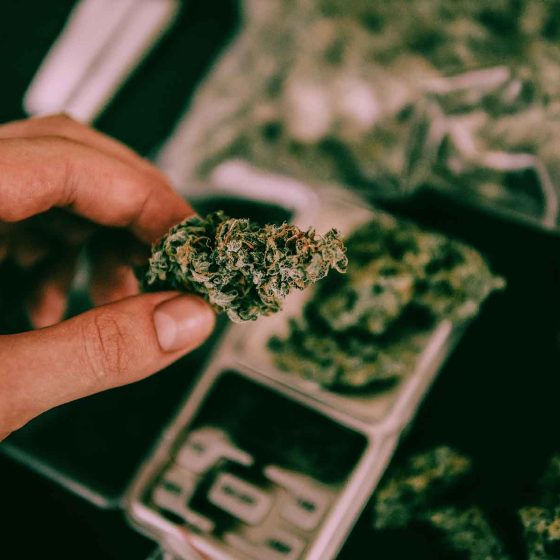
In some cases, it may be difficult to distinguish between some types of mould and the natural, cannabinoid-rich trichomes of your cannabis. Trichomes are small, glandular appendages that cover the surface of cannabis leaves and flowers. If in doubt, taking a closer look with a magnifying glass may prove useful. Trichomes are easily distinguished by their shiny and sticky appearance and their mushroom-like tips. On the other hand, mould will usually appear as a fuzzy blanket covering the affected area of the plant.
Being able to recognise mould on your cannabis products – whether it be a living plant or cured buds – is extremely important. While it may be tempting to simply remove the area of the plant on which the mould is growing, this shouldn’t be considered a solution as mould is most likely still present on other parts of the plant, even if you can’t see it. While contact or consumption of mould doesn’t always cause serious harm, it may be associated with nausea, runny or blocked nose, irritation to the skin and eyes, and wheezing. However, in some more vulnerable people, it can cause more significant reactions. For patients in particular, it’s best to follow the golden rule: when in doubt, throw it out.
Medical cannabis and mould
Mould can affect all types of cannabis, whether it has been produced for the recreational or medicinal market. Even though medical cannabis is expected to be grown to high manufacturing standards, mould can still thrive on prescribed flowers. Anyone who is an active member of patient communities online will know that mould reports pop up all too frequently.
The consumption of mould-affected products should always be avoided, as they can cause a number of reactions. For medical patients, mould exposure carries heightened risks. For Immunocompromised individuals, exposure to mould can have significant implications on health. For example, if mould is inhaled into the lungs, it can cause potential infections, allergic reactions, and other serious complications.
What to do if you find mould in your medical cannabis prescription
If you are a medical cannabis patient and you come across what you think might be mould in your cannabis products, you should alert your prescriber and/or pharmacy immediately. This will allow the provider to take the necessary steps to recall any affected products and make patients aware. Most importantly, never use cannabis products that you suspect may be affected by mould, no matter how desperate.