Around the corner from the Bellhaven Harm Reduction Centre in Durban the facility’s regulars, many of them homeless, sit in a small park in a narcotic daze. In front of the rehab centre the more clear-headed wash their clothes, hustling drinks, cigarettes and snacks out of a makeshift kiosk.
There, I ran into a friendly and cheerful Zulu man in his early thirties named Msizi Ngubane. Msizi is a former addict who received treatment at Bellhaven, he now works at the centre as a mentor to others. We grabbed a couple of beers from the kiosk and sat down to chat.
“In the townships, you don’t look for drugs, the drugs look for you,” Msizi says, cracking open a cold one. “They’re everywhere. You didn’t choose to be in that environment, your family was broke to stay in that place. And you will hear grown-ups saying, ‘drugs were not there in our times, we never smoked drugs!’ I know, that’s why you never smoked it. But the alcohol was there, and that’s why you drank it!!”
Msizi spent his childhood with his grandma. She used to beat him out of frustration with her poverty-stricken surroundings, and the young Msizi turned to sniffing glue to blot out the pain. When he moved from the countryside to Durban with his mum, he hung around with boys smoking dagga (pronounced da-kha – cannabis) at school. Eventually, he tried whoonga, also known as nyaope – a Frankenstein cocktail of weed, heroin, and a mishmash of various medicines, all wrapped together in a spliff.
Slowly but surely, one or two drags weren’t doing the trick any more, and Msizi found himself craving more.
“When you’re starting, everyone’s very friendly,” he smiled. “They’ll be like, ‘come smoke with us’. It’s easy for them to give it to you. When you start asking for it, that’s when they say, ‘no, you have to make a plan.’ That’s when there’s a problem. I also took rock, like crack cocaine – we call it rock here. A rock would get me very high, then I’d use whoonga as a downer.”
South Africa’s heroin history
From the poppy fields of Afghanistan, smack travelled south to Pakistan’s Makran coast, where it was packed onboard ships and sailed across the Indian Ocean, landing on the east African shores of Zanzibar, Mombasa and Mozambique. From these coasts, it was transported overland to the biggest consumer on the continent, South Africa. Heroin took hold in the townships of Joburg and Durban, which became ground zero for gang wars. A portion of the product landed in Durban directly.
“Durban became very famous for a form of heroin which was called sugar,” Professor Monique Marks, the founding director of Bellhaven, told me over a cup of tea.
“About fifteen years ago, this sugar started being developed in places like Chatsworth, which is the Indian area of Durban where there are heroin production factories. And then what happened is that Durban harbour would be the entry point from Afghanistan, Pakistan and Asia, and then it would get sent out to Joburg or parts of Europe and the US, but now because we become major consumers of heroin, a lot of it stays. An interesting thing about heroin is that as demand has grown, the price has actually fallen, so all the stuff about trying to stop supply-and-demand is a waste of time; it’s cheaper to use heroin than to use alcohol.”
Uniquely in Durban, heroin is sold in medicine-style capsules, making it easier to keep track of the merchandise and make sure everyone gets the same dose. This comes with an added bonus – if you’re stopped by the cops, it merely appears to be antibiotics. Different colours signify gang branding – for example, the white-and-blue capsules are nicknamed “Metro,” after police cars.
Competition over clientele in the city is fierce. In 2021 crime lord Yaganathan Pillay aka ‘Teddy Mafia’ was gunned down at his home in Chatsworth. But his assassins underestimated the grassroots support enjoyed by Durban’s Robin Hood. Pillay had invested so much money in his community that his supporters would show up in court wearing T-shirts reading “the people’s champion.” The hitmen were chased down by an angry mob who shot, beheaded and lynched them in public.
The South African townships are seen similarly to the Brazilian favelas, with the same fear that you’ll get your phone snatched by nyaope fiends the second you step foot between the shacks. After all, drugs are expensive, artificially inflated by the fact they’re illegal, and if you’re broke and have no job, you still must pay for them somehow. But just because you’re on drugs, even heroin, it doesn’t make you a thief. Msizi preferred to hustle for his cash.
“I learned you can actually start a business within five minutes here in town,” he explained. “Buy one packet of mosquito coils, sell it for ten rand, go back and buy two packets, sell them for ten rand each, then you have twenty rand. Before the day ends, you have like thirty packets of mosquito coils with you!”
“You cannot turn away any opportunity when you’re smoking. If someone says to you, ‘I need someone to put my window glass for me,’ you can’t say you don’t know how to do that. You say that you are an expert in that field! I can do painting, security, because cravings are pushing you to try everything. Stealing? Ah, that was not my style. In South Africa, they enjoy killing people caught trying to steal. When someone is running away and you hear that word ‘vimba – catch him!’… that means someone is about to die. You will even get killed by only women. You will turn around and there is not even a single man, only women! They will be hitting you with everything! I never imagined myself going out of the world like that. No, no, it’s too much.”
“They’re gonna beat you and nobody’s gonna care,” he continued. “You’re a drug addict, so you’re supposed to be beaten, they say. Yesterday someone said at a meeting: ‘I saw them hitting someone, but they were just hitting a parah [junkie].’ What is a parah? A human being! It’s somebody’s daughter! That means we have failed as a human race.”
Cannabis – gateway drug or exit drug?
Msizi had arrived back in Durban from Zululand one night when he got to talking to a fellow addict on the street who told him about a place called Bellhaven, where he could find free methadone. This helped him stabilise his life, and he now acts as a bridge between Bellhaven’s medical staff, and fellow street people who might be anxious to approach services. Bellhaven follows the principles of harm reduction: that is, it’s not a rehab where you get “clean”, but it tries to meet you where you’re at and helps you live your best, healthiest life. As a sign on the wall read: the dead don’t recover.

The majority of cannabis users – and in South Africa that’s probably the majority of the population – do not transition to other forms of drugs
Msizi’s descent into drugged-out despair began by huffing glue, before graduating to cannabis, and finally, crack and heroin (plus occasionally dabbling in meth). In a way, he followed the classic trajectory of the “gateway drug.” This concept originated in the 1930s, when researchers found 100% of drug addicts they surveyed had also sampled marijuana. Conclusion? Imbibing just one reefer will inevitably end with you standing on a street corner, offering your orifices at competitive prices just to chase the dragon one more time.
Nowadays, we recognise this theory has a tenuous relationship with reality. Marijuana is only a gateway drug in the same sense that taking an afternoon yoga class is the gateway to enlightenment. You could make that correlation with any drug, caffeine being the most common – by the logic of the gateway drug theory, all druggies started out getting their fix in Starbucks.
“The majority of cannabis users – and in South Africa that’s probably the majority of the population – do not transition to other forms of drugs,” explained Professor Marks.
“I can tell you that because I’m a cannabis user. I have no desire to use heroin. I’ve tried MDMA once, I’ve no desire to go back. I don’t particularly want to try any other drugs. I’m not opposed to it, but I don’t feel a need to; the cannabis works for me. And I think the majority of people would probably feel the same. For people that are dealing with serious traumas, cannabis will be a gateway drug, not because of cannabis, but because it’s usually the first drug they can be introduced to and when that doesn’t have the desired effect, then they will move towards other types.”
Instead, cannabis is one of the tools recovering addicts like Msizi use to stay off heroin – so, kind of the opposite of a gateway drug.
“Dagga will always make you think; whether you like it or not, but you will think!” he said, sparking up some dank dagga.
“For me, during the period when I stopped smoking [drugs], whenever I smoked weed I would just think about stuff other than whoonga, you know? You get the chance to review, to look back and say, ‘ahhhh, where was I when all this happened?!’ To me, that’s what the weed does. It keeps me calm and makes everything clearer. I can actually concentrate. Because I’ve seen many people, even someone who stops drinking alcohol… [with weed] there is no pain, no withdrawal. It’s just when you feel like you want to smoke, you’re gonna smoke; if you don’t feel like, you won’t smoke. Yeah, so it’s more like a habit.”
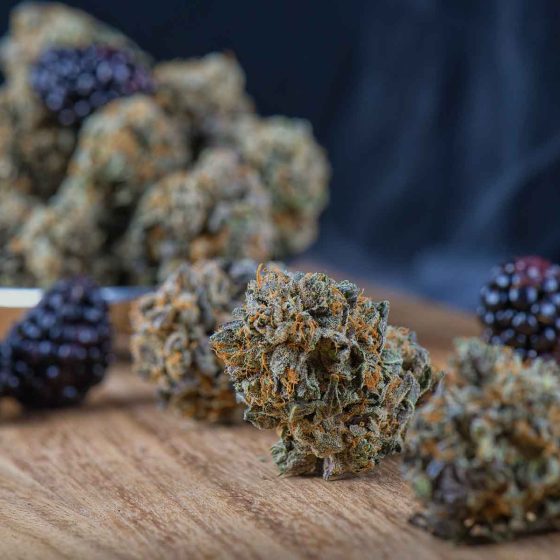
South Africa legalised the personal consumption and cultivation of cannabis in May. There’s still no authorised, non-medical distribution, but most dispensaries follow a fairly loose interpretation of the rules. I dropped by one recommended by Professor Marks. Customers – black, white, Coloured (mixed-race) and Indian – lounged around on the sofas smoking or playing pool. The front desk was stocked with oils, edibles and Yoda pipes.
“People who come here tell me what they want, indica or sativa,” he said, reaching for a glass jar behind him.
“Oftentimes, the customer comes here and I already know what they want. Hey, would you like to try one of our dabs?”
The budtender scooped a tiny blob of the yellow, honey-like cannabis oil into a pipe and heated it with a small blowtorch, beckoning me to inhale the sizeable cloud within, immediately plunging me into The Matrix. That shit was strong. Walking home, I experienced the theory of relativity. Was everything in slow-motion… or was I just thinking faster? Yoda pipes on display in the Durban dispensary
Cannabis by itself won’t stop anyone in withdrawl bouncing off the walls, jonesing for another fix. Recovery is a complex process and it would be simplistic to suggest that THC is a magic fix. But anecdotal stories of cannabis taking the edge off of cold turkey are told aplent. A 2023 study from UCLA polled 205 consumers of both illicit opioids and marijuana. Over half said that they smoked weed to rein in their opioid cravings, showing that for certain individuals, it worked: a multivariable analysis showed that cannabis use “was significantly associated with self-reported reductions in opioid use.”
“Heroin is a sedative, it’s not an upper, but it does take away any feeling of trauma, or like anxiety,” Monique Marks said.
“It’s best described by a friend of mine, who was a heroin user, like being in the arms of your mum and dad. When you’re looking for that embrace with cannabis, it depends on what strain we use. So if you’re using an indica strain, it has a calming effect. If you’re wanting a high you would use the sativa strain. So our clients are very good at knowing which strains they need to use to kick in when you’re not having the arms of your mother around you and your life is chaotic and traumatic. And you would probably at night want to feel that more sedated effect, and then you would use an indica strain. It doesn’t have entirely the same effect, as remember that heroin works on your opiate receptors. And that’s why you have to deal with those withdrawals, at the same time as dealing with stabilisation. That’s why you would combine the medication, which would be opioid substitutes, with a mood stabiliser, which people used to do for cannabis. It’s a tool, but it’s an inexpensive and accessible tool which many feel comfortable with.”