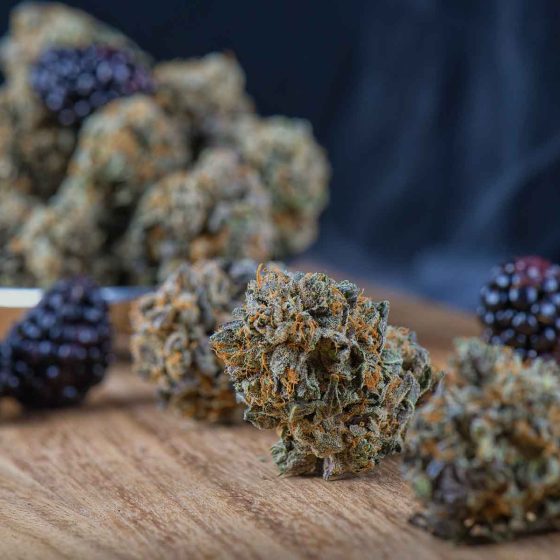
Access to medical cannabis has slowly improved since the 2018 rescheduling of cannabis-based medicines. Eligible patients can now access cannabis oils, sprays, and of course, flower, for the treatment of a wide range of medical conditions – albeit through private clinics as opposed to the NHS (at least in the vast majority of cases).
Despite the diversification of the industry, cannabis flower remains the most commonly prescribed medical cannabis product. But how do patients know which strains are right for them? In this article, we take a closer look at how cannabinoids and terpenes differ between different cannabis strains to provide a guide for first-time medical cannabis patients.
What is a cannabis strain?
In the world of cannabis (and of botany, in general) the term “strain” refers to the names given to different variations of a plant, of which appearance, effects, taste, and aroma can vary significantly.
These differences can occur naturally through genetic mutations and cross-pollination, or by human intervention through selective breeding. The term “cultivars” may also be used to describe plants that have been selectively bred based on their traits, and is often considered the more appropriate of the two terms.
These strains (or cultivars) can either be of pure cannabis varieties – widely considered to be either Sativa or Indica – or hybrids. Strain names often reflect the traits of the plant, whether it be due to its supposed appearance (like White Widow), or aroma (like Sour Diesel); however, they can just as often appear obscure and even outright nonsensical – especially to the first-time patient.
The Sativa vs Indica debate
As mentioned above, strains are categorised into three groups: Sativa, Indica, and hybrid. The genus cannabis is generally considered to have three species: Cannabis sativa, Cannabis indica, and Cannabis ruderalis. The latter of these species is generally not cultivated for consumption due to its lack of cannabinoids, particularly THC.
Among cannabis users, there is a general belief that the cannabinoid content and effects of a cannabis strain can be predicted based on whether it comes from the indica or sativa species. For example, Indica strains (widely considered to be higher in the psychoactive compound THC) are said to be sedating while Sativa strains (said to contain higher levels of CBD) elicit a more energising “high”.
However, this system has come under increasing criticism in recent years for over-simplifying the biochemistry of the cannabis plant. In fact, some argue that they are not two distinct species at all. Many experts now believe that there is no difference between Cannabis sativa and Cannabis indica on a molecular level and that differences in appearance may be due to environmental factors.
These environmental factors may once have also played a role in their cannabinoid and terpene content; however, after decades of selective breeding (and even longer periods of natural cross-pollenation), the majority of strains on the market today are, in fact, hybrids.
The role of cannabinoids and terpenes
While the concept of distinguishing cannabis strains based on their indica or sativa origins may be futile, there is no doubt that different strains can have different effects. These effects are widely attributed to their cannabinoid content. For example, CBD has gained significant attention for its apparent anti-convulsion and anti-anxiety potential, while THC may be effective for pain relief and appetite stimulation.

Both cannabidiol (CBD) and delta-9 tetrahydrocannabinol (THC) have been found to possess some impressive therapeutic properties – so much so that other fundamental compounds found in the cannabis plant are often overlooked.
Terpenes and cannabis strains
Terpenes are chemical compounds that are present in all plant species. They are believed to contribute to each plant’s aroma and flavour. They are widely used in scented products, including cleaning sprays, candles, and perfumes, but there is also evidence of their therapeutic potential.
For example, various studies indicate that terpenes may have antifungal, antimicrobial, antiviral, anti-inflammatory, and even anti-cancer properties. Some research indicates that terpenes and cannabinoids in cannabis even work synergistically to deliver different medicinal benefits – a phenomenon known as the Entourage Effect.
The bottom line is, that different cannabis strains contain varying levels of CBD, THC, and other cannabinoids, as well as terpenes and flavonoids, regardless of whether they are advertised as sativa or indica strains – and their effects will also vary accordingly.
Which cannabis strain is right for you?
Of course, as a new medical cannabis patient, figuring out where these different strains could fit into your treatment plan can be a daunting prospect. It is well known that THC is intoxicating while CBD is not. But there is so much more to consider when choosing the right cannabis strain.
First and foremost, there is the question of what symptoms you are aiming to manage. Then there is the issue of tolerance. Individuals with less experience with cannabis will likely wish to start with a cannabis strain that is lower in THC to avoid overwhelming side effects.
Cannabis strains in the medical industry
While some illicit sources may be able to provide the strain name of a given cannabis product, there is no way to be sure of its chemical profile. This can make it particularly difficult for first-time medical consumers to identify the right cannabis strain for them.
The good news is, since medical cannabis was legalised in the UK in 2018, patients can now access regulated cannabis products on prescription via private clinics. This gives patients access to trained healthcare professionals with specialist knowledge of their particular condition and the best strains for their circumstances (take a look at our article: ‘How does a doctor decide on a suitable medical cannabis strain?’).
Some in the medical cannabis industry have adopted the use of popular strain names to describe medical products. They argue that this may help patients who are familiar with said strains to identify the right products for them. On the other hand, others question the appropriateness of these names in a medical setting. More clinical names (such as T25 and T18) are also used, with websites such as MedBud.wiki also stating their respective strain name.
But whichever names are used, regulated products undergo chemical assays to confirm the cannabinoid and terpene content and hence give patients an insight into their effects. Discussing the cannabinoid and terpene content of different cannabis strains with a qualified doctor can help you to find the best strain for your treatment aims.