


About an hour’s drive east of Lebanon’s capital city, Beirut, is the Bekaa Valley, the Sinaloa of the Middle East. A lawless plain flanked on either side by mountain ranges ruled by semi-feudal tribal clans and Hezbollah, an Islamist militia and the world’s mightiest non-state army. Police only exist here as a formality. Once described in the US Congress as “the world’s largest drug field,” the Bekaa has long been out of reach of the central authority in Beirut, hiding thousands of farreen (fugitives).
I drove past farms and vineyards; past ramshackle refugee camps, little more than tents; past Sunni, Shia and Christian villages, the Shia villages with yellow-and-green Hezbollah flags flapping on their roofs; past the marble pillars of Baalbek, the best-preserved Roman ruins in the world. And then I stopped. There, by the side of the road, were green fields of cannabis as far as the eye could see, like looking at a cornfield in Nebraska. On the neighbouring field, a sprinkler was watering the crops.
As Israel mounts an invasion of Lebanon to oust its nemesis Hezbollah, it’s unclear what will happen to the drugs industry, which has historically flourished despite, and indeed because of, war and occupation.
Lebanon’s hash history
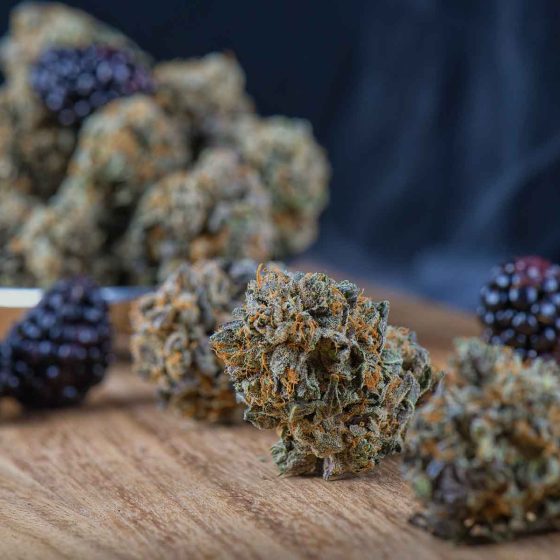
Arab and Ottoman writings credit Sufi mystics with introducing hashish from the east, but it wasn’t until the 1920s, while Lebanon was a French colony, sorry, “mandate”, that hash became big business. Greece had just imposed prohibition, cutting the Egyptians – the biggest stoners in the region – off from their plug. Farming moved to the Bekaa Valley, which provided the ideal sunny climate for cultivating high-grade hash. Soft, crumbly, with a piney aroma and a distinctly reddish hue, the legendary Lebanese Red was a huge global hit. This is what narco-nerds refer to as the balloon effect: if you suppress the drugs industry in one place, it simply relocates elsewhere. Although the French forbade cannabis cultivation in 1926, the colonial coffers were handsomely filled by wealthy, influential landowners to look the other way.
By favouring the Christians, the French left Lebanon a deeply polarised society at independence in 1943, a situation later aggravated by the arrival of hundreds of thousands of Palestinian refugees, upsetting the delicate sectarian balance. Everyone had guns and in 1975, the tensions erupted into a civil war. Fearing a power vacuum on his doorstep, Syrian dictator Hafez al-Assad ordered his troops into the Bekaa, while in 1982 Israeli tanks rolled through Beirut, smoking out Palestinian guerrillas. The Israelis would occupy southern Lebanon until 2006. Massacres and revenge massacres took place, the bloodiest when the Christian Phalangist militia entered the Sabra and Shatila refugee camps and slaughtered their inhabitants while Israeli soldiers stood by.  Lebanese hash. Source: Niko Vorobyov
Hash output soared to never-before-seen heights, by 1981 occupying 80% of arable land in parts of the Bekaa and earning a killing for the myriad armed factions. The Phalangists were particularly involved in drugs-for-guns swaps with the Montreal mafia: mob boss Frank Cotroni personally telephoned warlord Suleiman Franjieh to seal the deal, the Canadians outfitting his militia with M16 assault rifles which one mobster demonstrated by firing on a refugee camp.
Meanwhile, Israel’s occupation of southern Lebanon had created a de-facto open border, and enterprising soldiers hid Lebanon’s finest export in their vehicles or the magazines of their rifles, halving the price of hashish in Jerusalem. Big-time narcos collaborated with the Israelis, such as Mohammed Biro. Biro was a crooked customs officer with Israeli contacts at the highest level, once hosting Defense Minister Moshe Arens at his home. Israeli authorities knew about him for years but let him go about his business as he provided useful information. The Syrians, too, got a piece of the action, allegedly airlifting tons of hash from the Bekaa in military helicopters for onward sale in Europe.
Fighting was as much over matters of faith as smuggling rackets and control of the ports. By the time a truce was struck in 1990, it was more a turf war than a crusade between cross and crescent. The United States blacklisted Lebanon as a drug-making country, so when it came time to rebuild the Lebanese had to co-operate to be eligible for aid.
“In the 1990s after the civil war, the government was very unorganised and everything was done in a very unprofessional way,” remembered Elias Maalouf, owner of the Chateau Rayak winery.
“They confiscated drugs by burning them and the smoke is supposed to travel far, far away from the houses, but they didn’t have enough fuel so they burned it two kilometres from here, so we all woke up the next day… happy. It was like after a party and everybody was in a hangover. Even the priest got high.”
Before 2011, the Lebanese army was routinely deployed to the Bekaa to uproot illicit agriculture. Then at the outbreak of the war in Syria, they became too preoccupied with securing the border to pay much attention to dope. The army’s retreat let the growers step up production once again, hiring destitute Syrian refugees as their low-rent workforce.
Meanwhile in Syria, Hafez al-Assad’s son Bashir miraculously clung to power thanks to his guardian angels: Russian warplanes pummelled rebel cities into dust, while Hezbollah mopped up on the ground. In September 2015, Hezbollah fighters besieged the rebel-held mountain town of Zabadani. Pictured with them, rocking his signature cowboy hat, was Lebanon’s most infamous outlaw: Noah Zaiter.
Lebanese Narcos
Zaiter is wanted by Interpol. But despite being sought for some 4,000 charges, Zaiter knows he’s protected in the Bekaa and regularly appears on Lebanese talk shows and grants interviews. He’s the Middle Eastern El Chapo – hopefully, I wouldn’t be Sean Penn.
The self-proclaimed ‘Lebanese Robin Hood’ lives in a gaudy mansion near Baalbek buttressed by Roman pillars. As I waited in his garden, an African maid in a headscarf presented me with a pack of cigarettes and a lighter as a welcome gift. I felt a shiver down my spine; I wasn’t sure if it was windy outside or I was just nervous. Suddenly I heard a shout. It was him. Tall, wearing a back-to-front baseball cap, a round medallion around his neck, and a ponytail, his huge right hand squeezed my tiny, girlish palm as he twirled a handgun on his left index finger like a cowboy. He was accompanied by two bodyguards: one clean-shaven and skinny who looked like he was in his early twenties, carrying a black M16 fitted with a grenade launcher; another one older, bearded, whose right arm was scarred with burns, with a pistol packed down the back of his jeans. We sat in a circle in the living room where a giant portrait of Zaiter himself hung off the wall.
Noah isn’t shy about who he is or what he does. Leaning over to me, he showed me a trailer on his phone for an action movie retelling of his life.
“Am I a hash farmer?” the voiceover boomed. “Of course, I am proud of what I’ve done for my people and my clan.”
“The boss wants him alive!” a mook cried over the sound of gunfire.
“I’ve been fighting the army for thirty years,” Zaiter explained.
“Every time the police catch a drug dealer, they say they got it from me. They say that Abu Salah [another Baalbek drug lord] was dealing with me even when we were feuding. They even claim they’ve seen me in Jounieh [a coastal Christian town] selling someone a single marijuana cigarette… can you imagine, me going all the way out there?! But I tell my men not to shoot at the soldiers. Out of a hundred soldiers, only ten are bad. So that’s why I tell them to shoot in the air.”

Zaiter’s friendlier with the Syrian authorities, with whom he has a common foe.
“The Islamic State [ISIS] tried to kill me twice with bombs under my car, because I spent so much money on a bounty out on them,” he claimed. “The civil war cost me so much money!”
“You seem to be doing alright now,” I noted.
“Yes, alhamdulillah.”
Another feud is with the powerful Jaafar clan. From what I could dig up, the beef began in 2003 when one of the Jaafars was killed by a Zaiter. In 2005, Noah and his men opened fire on the Jaafars in the Al Sharawneh neighbourhood of Baalbek, sparking a gun battle with rockets, machine guns and hand grenades lasting half an hour until the army arrived and contained the situation. But Noah played down the hostility.
“Yes they are my family, my cousins,” he smiled. “Half of my men are from the Jaafars. It’s just a family argument. But we shoot at each other in the air, it happens sometimes.”
A devout Shia Muslim, Zaiter held out his phone and showed me a ruling by an Iraqi cleric that supposedly means Allah is cool with him slinging copious quantities of hash.
“It’s a holy plant,” he said. “Long ago my ancestors brought it from India and found it grows better here. My people have the fatwa from Iraq, it is permitted. After you take the buds to make hashish, you can use the rest to make clothing, jeans. They should have opened a factory here but they don’t want to. They should legalise it!”
I looked over to the bodyguards who were playing with their guns, passing them back and forth to each other, clicking and cocking the barrels. I couldn’t help but think some of this was for my benefit. I asked Zaiter for a photo with the M16 and we snapped a few shots for the ‘gram before I bid goodbye to the crime lord and his merry men. Zaiter has since been sanctioned by the British government for his support of the Assad regime. Source: Niko Vorobyov
Even before this year’s invasion, Lebanon was hanging on by a thread. The banking system collapsed, and otherwise law-abiding citizens turned to holding up banks at gunpoint to just withdraw their own savings. Beirut is the only capital I’ve been where you can actually see the stars at night because of all the constant blackouts.
Amid all this, in April 2020 Lebanon legalised marijuana. But only medical and industrial. For export only. And you were barred if you had a criminal record. As of 2021, there were 42,000 active warrants for breaches of the Narcotics Law in the Bekaa Valley. In other words, it’s still illegal in every way that counts.
So, will the Lebanese weed business survive yet another war?
Besides hashish, the Bekaa is also a source of Captagon. In the 1960s, Captagon was the brand name for fenethylline tablets manufactured in Germany to treat narcolepsy and ADHD. Upon swallowing, the pill metabolised into two more substances in the human body – amphetamine and theophylline, a weaker stimulant similar to caffeine – which together created a more potent effect than amphetamine alone, boosting confidence, alertness and concentration, as well as sensations of euphoria. Between fenethylline and pure speed, Captagon can be considered the healthier alternative as it’s easier on your blood pressure. But this medication had other side effects including anxiety, depression and horrific comedowns, and in 1986 the UN classed it as a controlled drug. The Bulgarian KGB, notorious for liquidating dissidents with poison-tipped umbrellas, began covertly manufacturing Captagon and exporting it east, where the speedy pills had picked up quite a fanbase among wealthy Saudi playboys. But in the early 2000s Bulgarian authorities dismantled the clandestine labs, and production moved to Lebanon and Syria, where it provided a lifeline for an economy battered by sanctions and war.
Caroline Rose is an expert on Middle Eastern drug traffic at the New Lines Institute. Although her speciality is Captagon, some of what she says could apply to the hash business too.
“I think the recent escalation in the region will have several immediate consequences,” she told me in an email.
“Firstly, there may be a surge in localised demand from the trafficking and production networks (many of which are aligned or even directly part of Iran-aligned and militant groups part of the hostilities). They will likely seek Captagon out as a stimulant that will enable them to fight for prolonged periods of time, stave hunger, and generate feelings of invincibility.
On the other hand, when it comes to broader smuggling operations into key destination countries like Saudi Arabia, I think that the hostilities will indeed hamper these groups’ ability to transport Captagon on an industrial scale. With several commanders eliminated, communication channels infiltrated, and attacks on infrastructure/meeting houses, these groups are primarily concerned about survival. I think in the immediate weeks, many militants will, quite literally, ‘get high on their own supply.’”
Cover image by Karim Mostafa. Additional reporting by Radwan Mortada. This article is based on two trips to Lebanon undertaken in 2022.







1 comment
It’s a tough situation for Lebanon. The real question is whether the government can create a sustainable framework that benefits both the local economy and curbs illegal activity, or if the cannabis narcos will continue to hold the upper hand. The future of Lebanon’s cannabis industry remains uncertain.